

2025
Tapestry – Woven, Mixed Fibre (wool, cotton, acrylic, polyester cotton, cashmere), 290 x 800 cm.
Commissioned by Future Observatory and Design Museum.
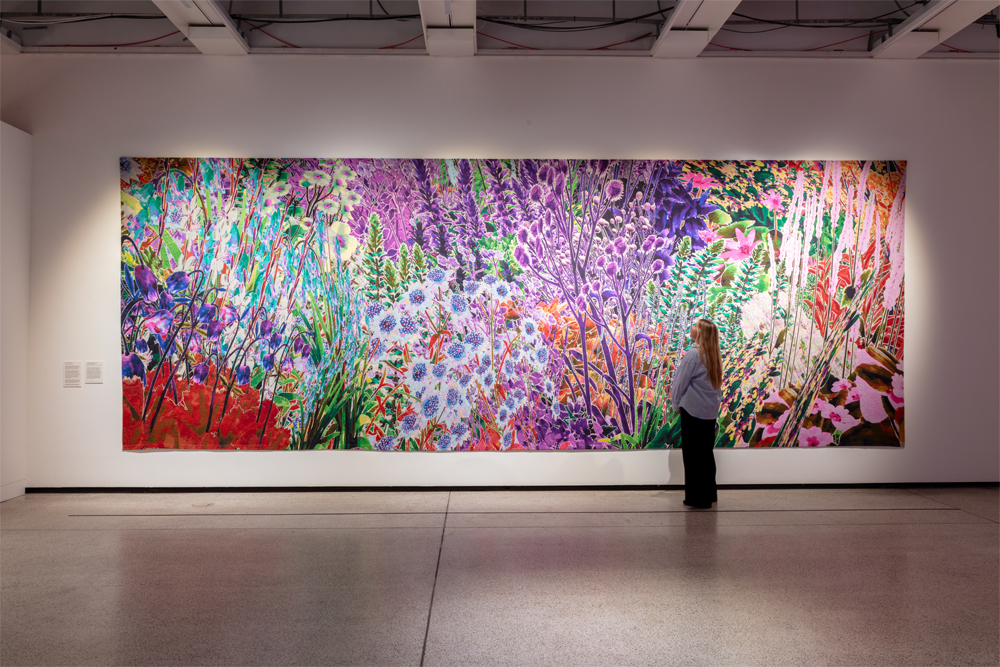
'Perceptual Field 7SzzLn6GnY97DSo7hCSLMf', 2025. Courtesy of the Design Museum. Photo Luke Hayes.
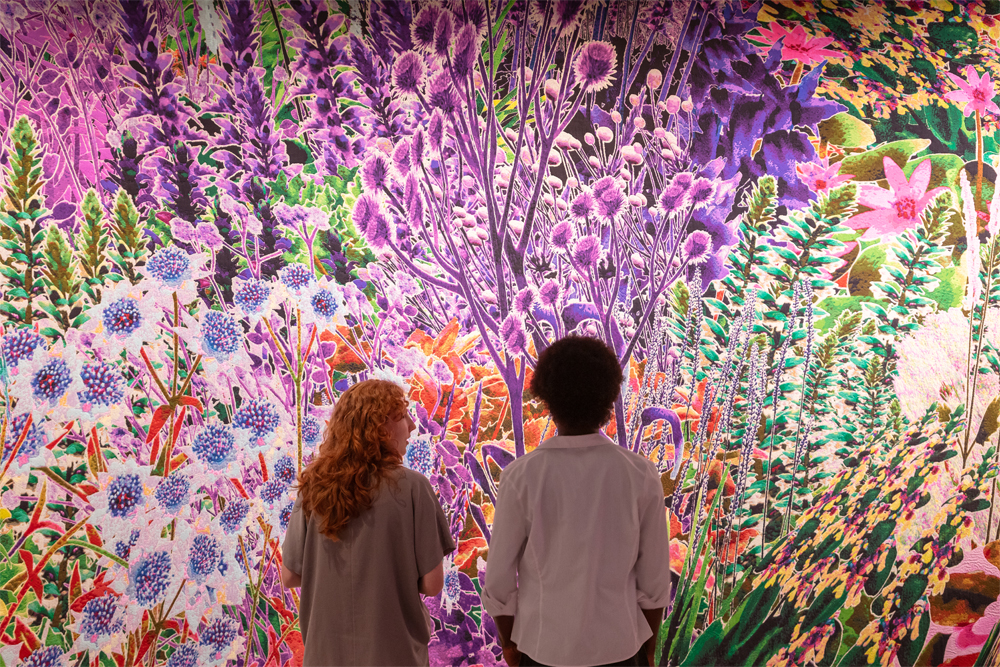
'Perceptual Field 7SzzLn6GnY97DSo7hCSLMf', 2025. Courtesy of the Design Museum. Photo Luke Hayes.
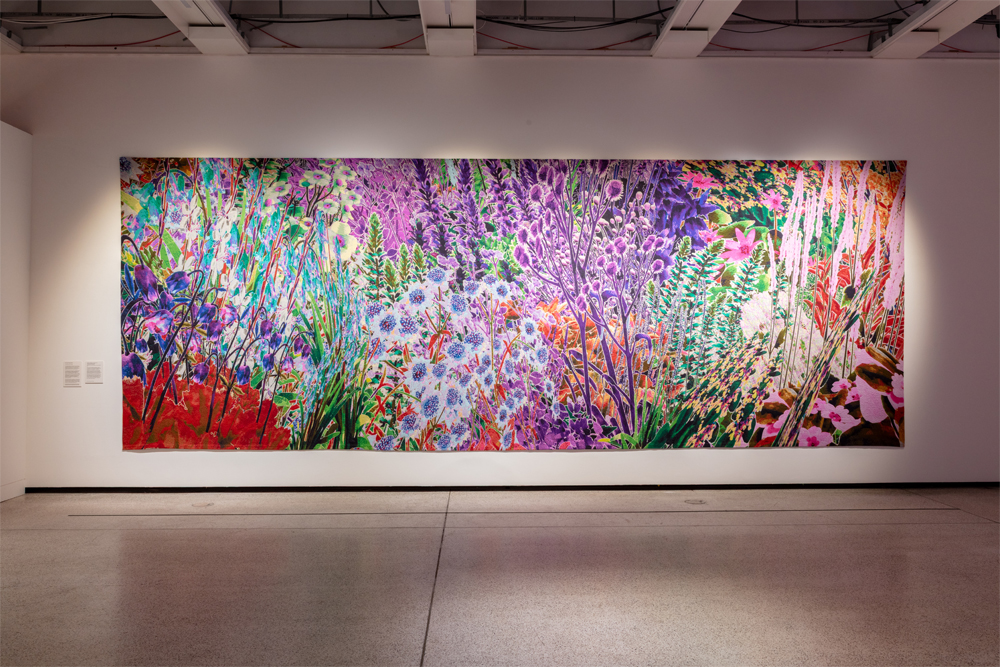
'Perceptual Field 7SzzLn6GnY97DSo7hCSLMf', 2025. Courtesy of the Design Museum. Photo Luke Hayes.
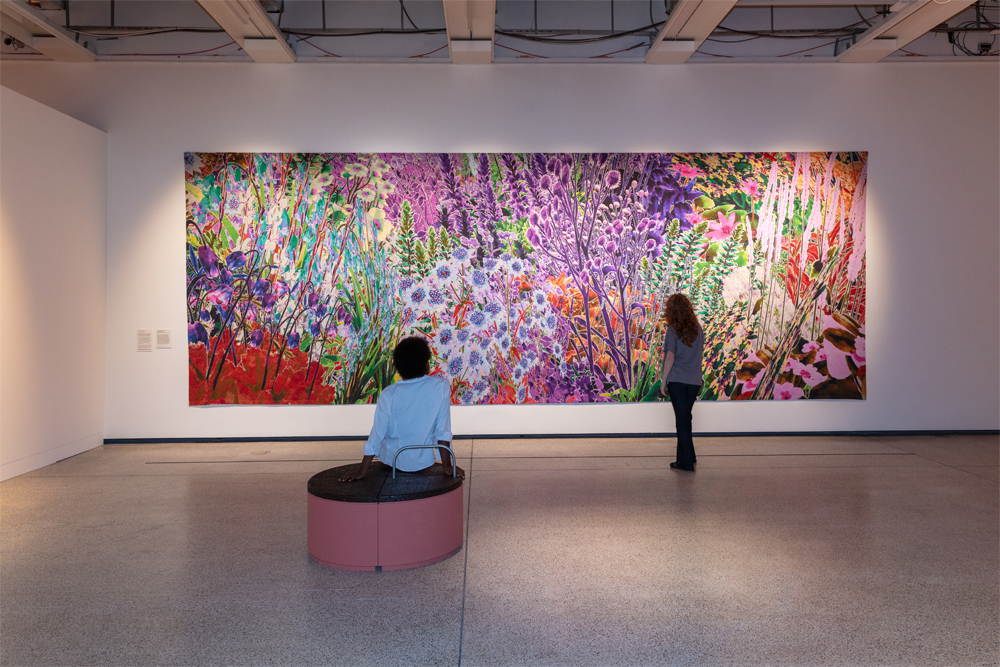
'Perceptual Field 7SzzLn6GnY97DSo7hCSLMf', 2025. Courtesy of the Design Museum. Photo Luke Hayes.
We are used to thinking of gardens as spaces we design for our own pleasure. Alexandra Daisy Ginsberg’s long-running project Pollinator Pathmaker uses an algorithm to design ‘living artworks’ that cater to the needs of pollinators instead, providing them with food and shelter.
The design of Perceptual Field 7SzzLn6GnY97DSo7hCSLMf has been determined by Ginsberg’s proposition for a planted edition that could be realised on the Design Museum site. The tapestry’s scale shrinks human viewers to the size of pollinating insects encountering flowers across the seasons, starting with spring on the left. As insects sense the world differently from us, the colours of the tapestry reflect a pollinator’s vision, rather than a human’s.
You can also visit a DIY Edition of Pollinator Pathmaker designed and planted using the algorithm at St Mary Abbots Gardens, just off Kensington High Street.
'Perceptual Field 7SzzLn6GnY97DSo7hCSLMf', 2025. Courtesy of the Design Museum. Photo Luke Hayes.
1/4